Where Should Kittens Sleep at Night?

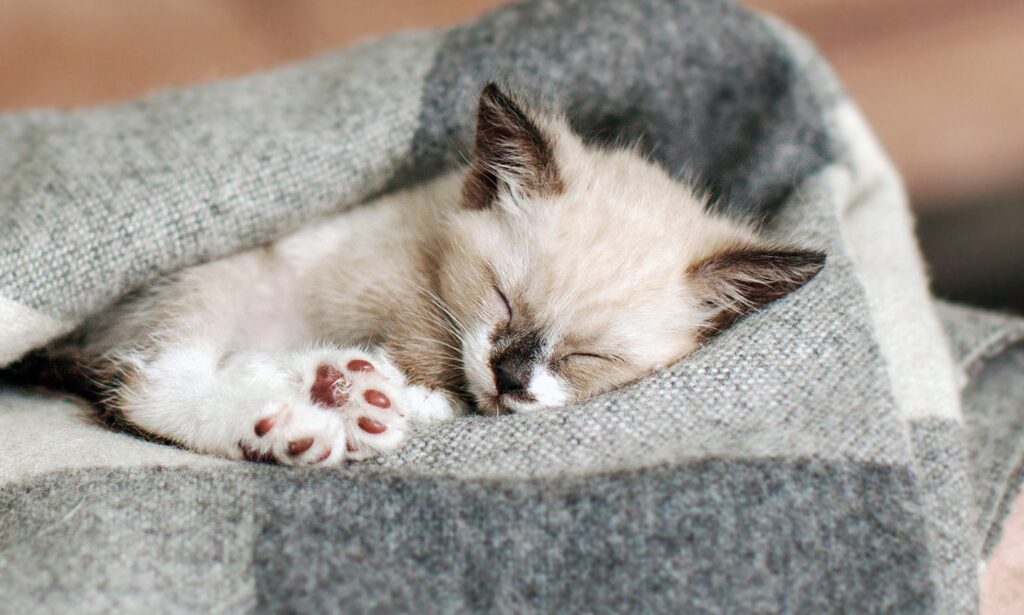
Photo by TatyanaGl/iStock/Getty Images Plus via Getty Images
Most kittens sleep best in a warm, cozy, secure space where they feel protected—ideally in a plush bed in a calm, low-traffic spot in your home, free from drafts and foot traffic. However, the best location depends on your kitten’s age, health, preferences, and stage of development.
We spoke to vet experts to uncover how much kittens sleep and where, the purr-fect spots for your kitten’s first-night setup, how to build a consistent bedtime routine, and the best vet-recommended beds for your new kitten.
Key Takeaways
- Kittens often sleep 16 to 20 hours a day and long naps are a normal part of kittenhood.
- Kittens sleep best in a warm, cozy, and secure spot that makes them feel protected—with easy access to their litter and water bowl.
- A plush bed placed in a calm, low-traffic yet accessible location can help your kitten adjust to their new home safely.
- Ideal sleep spots for kittens depend on their age, health, personality, and preferences.
- Daytime play time and a consistent bedtime routine can help your kitten settle in.

How Much Do Kittens Sleep?
A newborn kitten spends as much as 22 hours a day or 90 percent of their time sleeping, whereas at six months of age, they average 16 to 20 hours of sleep per day.
That said, cats and kittens don’t sleep for long stretches, but rather, they take lots of cat naps of one to two hours—with an average adult cat sleep session lasting 78 minutes. Kittens need a significant amount of sleep to support their rapid growth and development.
Where Should a Kitten Sleep at Night?
Where Should a Kitten Sleep on the First Night?
A kitten’s first night in their new home is a special time, but it can also be a bit overwhelming for both the kitten and the pet parent.
“It may be the first time they are alone, away from their mother, littermates and the surroundings that they grew up with,” says Dr. Doug Mader, MSc, DVM, volunteer veterinarian at U.S. Fish & Wildlife Service in the Florida Keys and author of “The Vet at Noah’s Ark.”
On their first night in their new home, kittens should be in a warm, cozy, quiet and comfortable space where they feel secure.
“It is best to allow the kitten to sleep in their own room for a few nights,” says Dr. Mader. “A closed bathroom, bedroom or office, etc., where they will not be disturbed is ideal.”
Provide your kitten with a cozy bed and a small blanket to cuddle with. The kitten’s food, water and litter box should also be in the room.
Placing a cat bed in a secure playpen, like the , can also be a good option, says Dr. Mader. “This provides them with a safe and enclosed space where they can’t get into any trouble while you’re asleep.”
Where Should Kittens Sleep at Night and in General?
After a few nights, once your kitten has had the chance to adjust to their new environment, you can begin to give them more freedom to explore.
Dr. Mader recommends putting your kitten to bed in their original room but leaving the door open. This allows your kitten to venture out and investigate other potential sleeping spots within your home. Just be sure to kitten-proof any areas they’ll have access to.
These might include:
A Warm, Cozy Cat Bed
A cat bed that’s low to the ground is the best place for a kitten to sleep, says Dr. Danielle Rutherford, VMD, associate veterinarian at Westside Veterinary Center in New York, New York. Though, a cat with good control can be fine in a slightly raised bed.
Place an additional cat bed or two in cozy spots in your home to give your kitten options.
An ideal kitten bed is one that provides warmth, comfort and a sense of security for your new pet.
Look for beds that are/have:
- Made from soft materials
- Raised edges to create a cozy, nest-like environment
- Appropriately sized to accommodate your kitten’s small stature, allowing them to feel snug and secure
Recommended Products

A Warm, Cozy Spot on Furniture
The living room couch might catch your kitten’s eye as a potential sleeping spot.
Many kittens enjoy the softness and warmth of a couch, and it might become their preferred place to nap during the day or sleep at night.
Can a Kitten Sleep in Your Bed?
Don’t be surprised if your kitten forgoes their own bed and decides your bed is the best place to sleep.
Sleeping with their human can provide a kitten with warmth, comfort and a sense of security.
If you’re comfortable with it, this can be a great way to strengthen the bond between you and your kitten.
Should I Let My Kitten Sleep With Me?
While letting your kitten sleep in your bed has its perks for both human and feline, there are a few reasons it’s not recommended to let your kitten sleep in your bed right away, says Dr. Rutherford. These include:
Risk of Injury
Small kittens could injure themselves if they jump or fall off a high bed or get caught in the bedding, warns Dr. Rutherford.
Because kittens tend to nestle under their humans, there’s also the risk of accidentally rolling onto them or injuring them with sudden movements during your sleep.
To mitigate these risks, a good rule of thumb is to wait until your kitten is a bit larger in size and old enough to get up and down from your bed on their own—typically around 6 months old.
Sleep Quality
Cats—and kittens in particular—often have bursts of activity during the night, during which they might zip around the room, pounce on your feet or explore their surroundings. These antics can lead to disrupted sleep for you.
Parasites and Infections
It’s important to wait until your kitten has had full health clearance from a veterinarian before allowing them to sleep in your bed, says Dr. Rutherford.
“Kittens can carry various parasites and infectious diseases that can be contagious to humans, especially those that are younger or immunocompromised,” she adds.
Can I Leave My Kitten Alone While I Sleep?
Whether or not to leave your kitten alone while you sleep is a concern for many new pet parents.
The good news is that, generally, it’s perfectly fine to let your kitten have some independence during the night—as long as they’re in a safe space and have access to everything they might need. This includes a cozy bed, a water bowl with fresh water and a litter tray, like this litter tray from Frisco.
When preparing a nighttime space for your kitten, make sure to kitten-proof the area by:
- Removing any hazardous objects or potential dangers
- Securing electrical cords
- Removing small objects that could be swallowed
- Ensuring there are no spaces where your kitten could get stuck or injured
Do Kittens Sleep Through the Night?
One common question from new kitten parents is, “Will my kitten sleep through the night?”
The answer to this question can vary greatly depending on the individual kitten, their age and their environment.
Kittens have a lot of energy—especially when they’re very young—and may not sleep through the night. It’s not uncommon for kittens to wake up during the night and be active or want to play. This is because cats are crepuscular animals, which means they are naturally more active during the dawn and dusk hours.
Fortunately, as they grow and mature, a kitten’s sleep patterns may begin to align more closely with those of their human family members.
How To Get a Kitten To Sleep at Night
However, there are steps you can take to encourage your little furball to match your sleep schedule:
Create a Conducive Sleeping Area
A crucial aspect of ensuring your new kitten has a peaceful night’s rest is providing them with a sleep environment that’s both comfortable and secure. Here’s how:
- Provide a soft, cozy bed and a soft blanket. “Keeping new kittens in a soft, cozy bed with high sides and a soft blanket will help to keep them warm and encourage a good night’s sleep,” says Dr. Rutherford.
- Place a warm water bottle wrapped in a blanket in their bed. This can help make their sleeping spot even more appealing and help keep them warm, says Dr. Rutherford. Just be sure to test the temperature against your skin first to ensure it’s not too hot.
- Keep the room dark or with very low light, temperate and free of distractions, including loud noises or movement, Dr. Rutherford adds.
Establish a Bedtime Routine
To optimize your kitten’s nighttime slumber, try tapping into the intrinsic instincts passed down from their wild ancestors. In the wild, cats adhere to a cyclical pattern of hunt-eat-sleep.
Mirror this natural rhythm in your nightly routine by doing the following:
- Start with a 10-15 minute play session (this emulates a hunt).
- After playtime, give your kitten a small amount of kitten food or a cat treat to stimulate a victorious catch.
- If all goes well, this sequence will signal to your kitten that it’s time to relax and drift into a blissful night’s rest.
Provide Adequate Play During the Day
Kittens have a lot of energy, and playing is an essential part of their development.
Ensure your kitten gets plenty of play and exercise during the day to help tire them out for a good night’s sleep.
Experiment with different types of kitten toys to keep their interest piqued and cater to their natural hunting instincts. A few good options include:
Recommended Products


Be Patient
It can take time for a kitten to adjust to their new home and develop healthy sleep habits. Be patient and consistent with your bedtime routine, and give your kitten time to adjust, and follow these tips for adjusting your cat’s sleep schedule.
Vet-Recommended Beds for Kittens
When it comes to choosing the right bed for your kitten, comfort, safety and warmth are top priorities.
Here are a few veterinarian-recommended beds to consider.
- Frisco Round Wicker Cat Condo: This bed is ideal for kittens and smaller cats, says Dr. Mader. “It offers the coziness of being covered, allowing the kitten a place to ‘hide’ and have their own space,” he adds. Another perk of this bed is the top perch with faux fur, which allows your kitten to sit up high and get a great view of their surroundings.
- Frisco Sherpa Blanket and Bolster Bed: Dr. Rutherford recommends this bed for its plush lining that will envelop young kittens in warmth. The included sherpa blanket provides an extra layer of heat, creating an ideal refuge for kittens seeking a snug and cozy nesting spot to call their own. “The warm blanket can also be used to cover a warm water bottle if needed in a cooler environment to keep the kitten warm,” says Dr. Rutherford.
- Earthtone Solutions Felted Wool Cat Cave Bed: This bed stands out in both its distinctiveness and functionality. Each cat cave is meticulously hand-crafted in Nepal using felted New Zealand wool—a material renowned for its breathable yet insulating properties. Dr. Mader recommends this bed for its snug, cave-like design. The enclosed space not only serves as a cozy retreat but also caters to a kitten’s instinctual need for a secluded resting spot.
Recommended Products


FAQs About Where Kittens Should Sleep
Where should a kitten sleep on the first night?
For your kitten’s first night, choose a warm, cozy, secure spot in a quiet space of its own, and provide your new kitten with an enclosed bed or a comfortable box with easy access to their litter box and water bowl. Avoid drafty areas, loud appliances, and heavy foot traffic so your kitten’s first night in your home feels as calm and protected as possible
Where should a kitten sleep on the first night?
For your kitten’s first night, choose a warm, cozy, secure spot in a quiet space of its own, and provide your new kitten with an enclosed bed or a comfortable box with easy access to their litter box and water bowl. Avoid drafty areas, loud appliances, and heavy foot traffic so your kitten’s first night in your home feels as calm and protected as possible.
Is it normal for kittens to sleep all day?
Yes, newborns kittens spend about 22 hours a day sleeping, and by six months of age, they sleep an average of 16 to 20 hours per day. Learn more about how much sleep is normal for kittens.
Do kittens sleep through the night?
Kittens wake more at night than adult cats tend to—especially as they adjust to their new home and routine—but plenty of daytime play and enrichment, a full belly at bedtime, an established bedtime routine, and a calming, designated sleeping area can all help your kitten (and you!) get better nighttime rest.
Attributions